Docs
Clients
Everyone you bill — and what your history with each of them is actually worth.
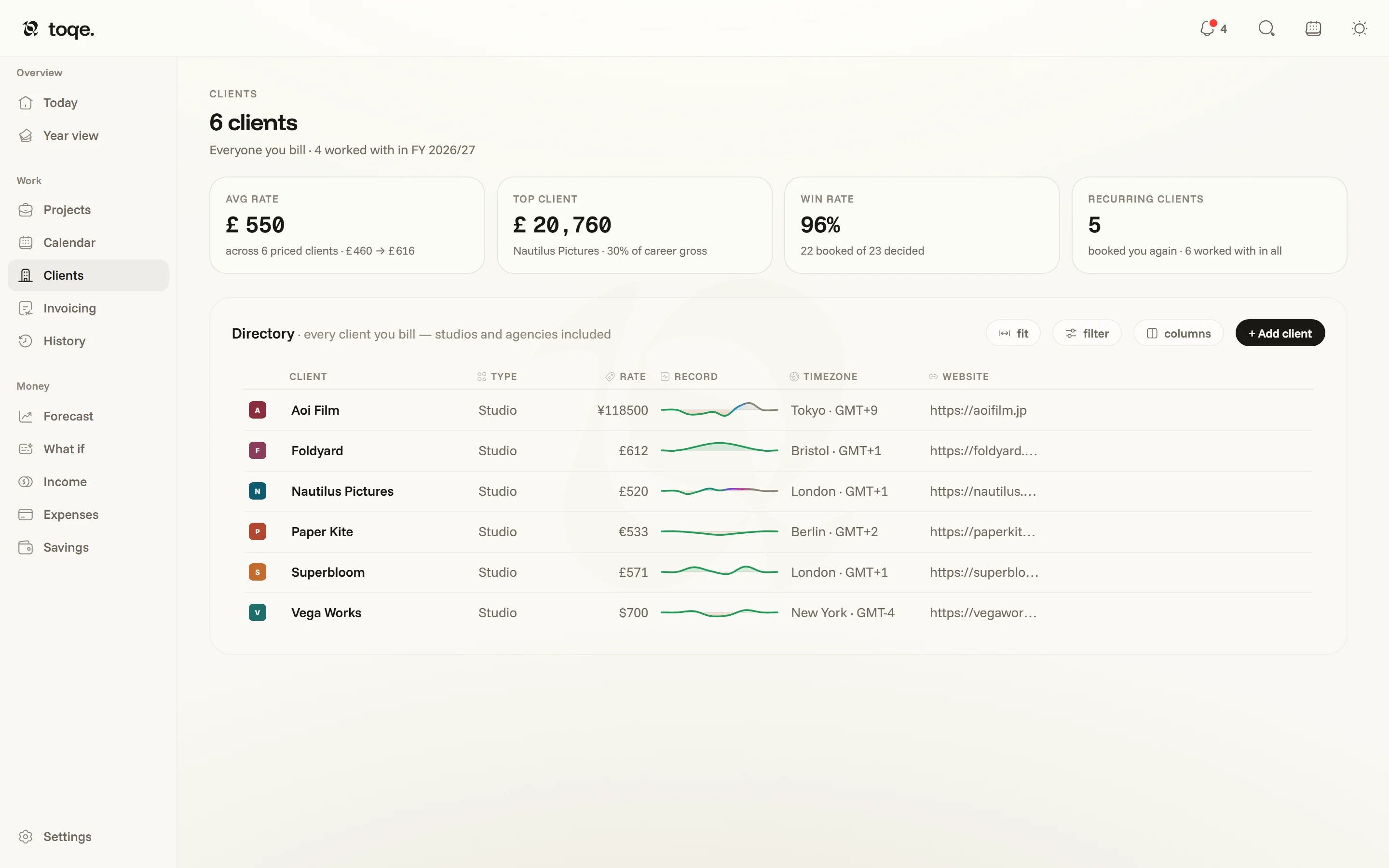
The directory
One row per client: type, their day rate in their currency, the record line, timezone and website. The masthead reads the whole book — your average rate across priced clients, the top client’s share of career gross (that tile opens their card), your win rate (booked, of decided), and how many clients came back. New bookings for a client inherit its rate and terms automatically.
The record line
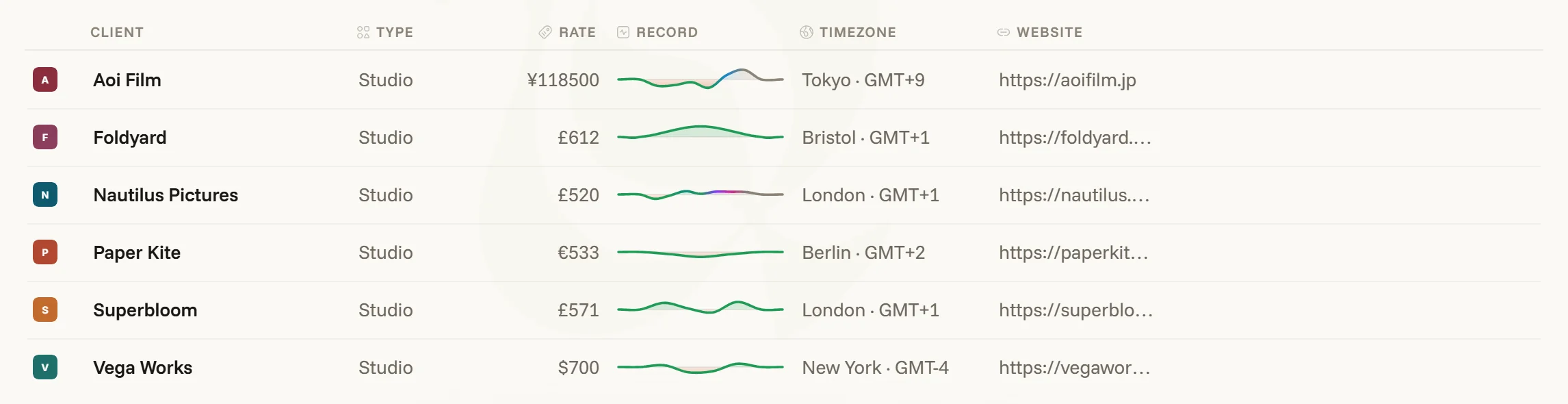
The little line in the Record column is your rate history with that client: the last 20 jobs in sequence, each one’s height showing its day rate against your going rate at the time — the day-weighted average of the twelve months before that job started. Above the hairline, better than your usual; below, cheaper, in deepening vermilion. Rates drift up over a career, so the baseline moves with the era — the line answers “was this a good deal then”, not “is this less than I charge now”.
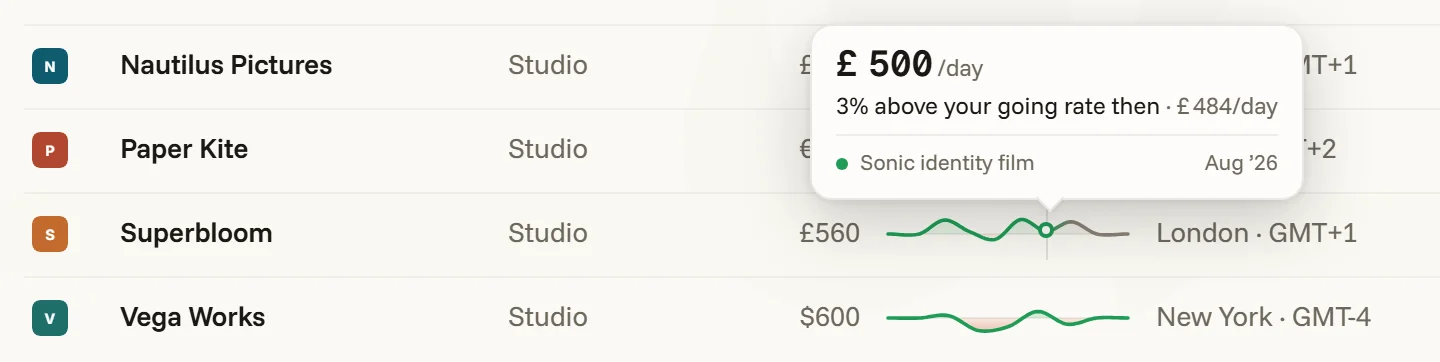
Move along the line and each job lights up with a dot and a small card: the day rate first, then how it compared with your usual rate at the time — in red when it was below — and the project and month underneath. The same card answers on the directory and on a client’s own card.
The client card
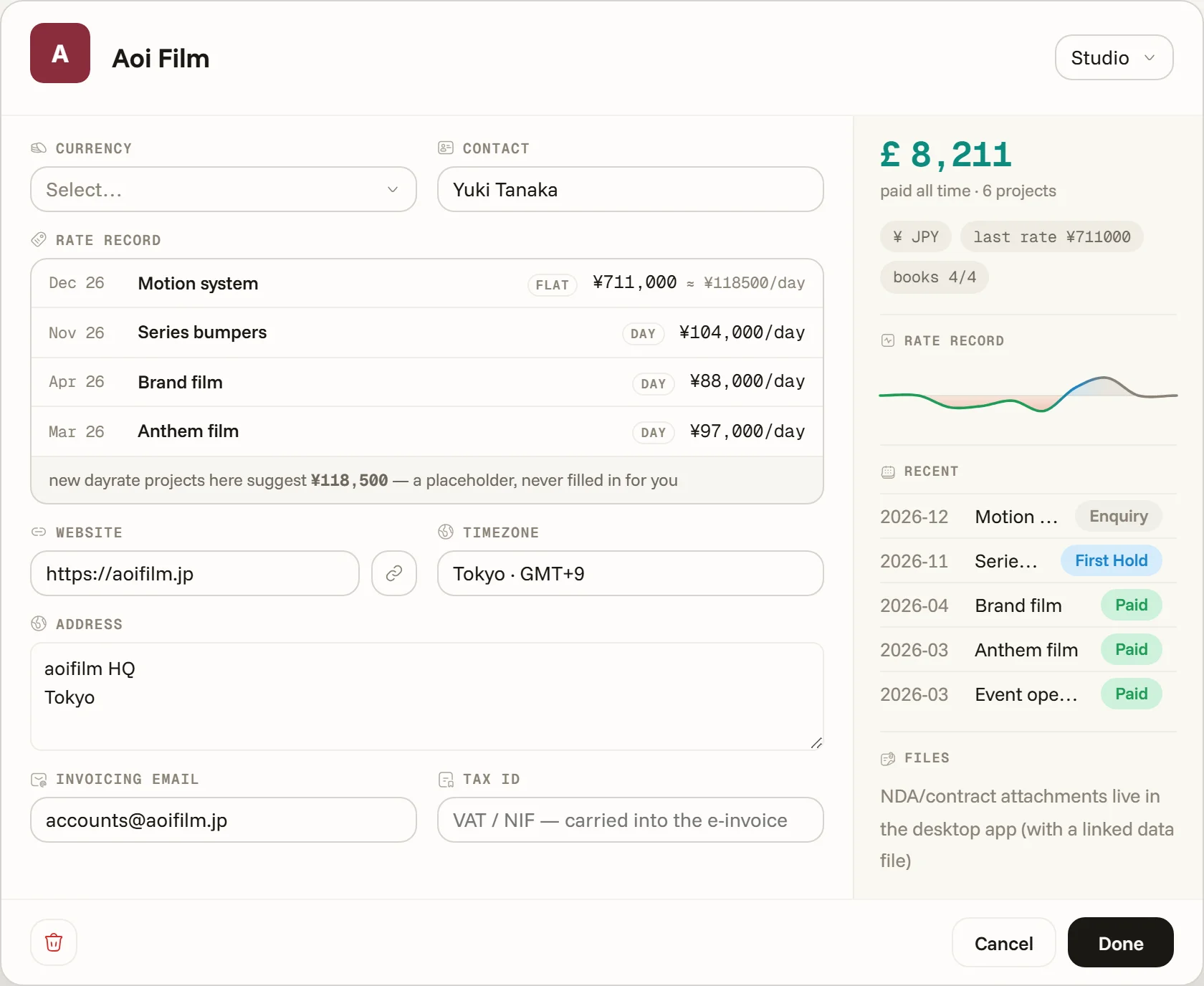
Click a row for the card: rate and currency, payment terms, the timezone (pick a city — it can also feed the clock cluster on Today), notes, and recent work. A client with a website filled in offers Use the site’s icon for its logo — fetched through toqe’s own relay, so no third-party favicon service ever learns your client list, and only ever on your click, never automatically.
Currency, carefully
A client’s currency fills a gap — linking a Tokyo studio to an unpriced booking prices it in yen. It never re-prices a project that already has a number: ¥300,000 must not quietly become £300,000 because of a link, so the project keeps its currency and toqe just mentions the client bills in another. Changing it stays one deliberate click, next to the rate.
Deleting a client unlinks its projects (the confirm names how many) — the work survives in History, it just no longer points at anyone.